
Robert's owner forbade the relationship, since Diana and any subsequent children produced by the union would be the property of John Dumont rather than himself. Historians estimate that Truth (born Isabella Baumfree) was likely born around 1797 in the town of Swartekill, in Ulster County, New York. However, Truth's date of birth was not recorded, as was typical of children born into slavery. Sojourner Truth was an African American abolitionist and women's rights activist best-known for her speech on racial inequalities, "Ain't I a Woman?", delivered extemporaneously in 1851 at the Ohio Women's Rights Convention. Sojourner provides an array of support to nearly 8,000 clients each year aimed at helping families affected by domestic violence achieve safety, justice and well-being.
Animal abuse and family violence
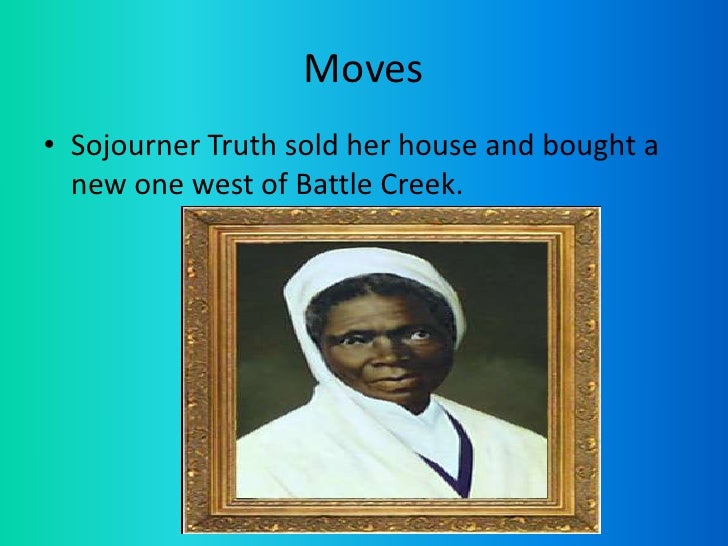
” speech to criticize race and gender discrimination at a convention in Akron, Ohio. In 1857, Truth moved to Harmonia, a former utopian community that was later incorporated into Battle Creek, Michigan. She spent the rest of her life advocating in various spheres and died in 1883 at the age of 86. As an itinerant preacher, Truth met abolitionists William Lloyd Garrison and Frederick Douglass. Garrison’s anti-slavery organization encouraged Truth to give speeches about the evils of slavery. In 1850, she dictated what would become her autobiography—The Narrative of Sojourner Truth—to Olive Gilbert, who assisted in its publication.
Violence is a force that expands and grows. But so is healing.
Lloyd Lillie, Jr., and Victoria Guerina was unveiled at the Women's Rights National Historical Park visitor's center. Although Truth did not attend the convention, the statue marked Truth's famous 1851 speech in Akron, Ohio, and recognized her important role in the fight for women's suffrage. Until old age intervened, Truth continued to speak passionately on the subjects of women's rights, universal suffrage and prison reform. She was also an outspoken opponent of capital punishment, testifying before the Michigan state legislature against the practice. A major project of Truth’s later life was the movement to secure land grants from the federal government for former enslaved people. She argued that ownership of private property, and particularly land, would give African Americans self-sufficiency and free them from a kind of indentured servitude to wealthy landowners.
Abolition and Women's Rights
It is unlikely that Truth, a native of New York whose first language was Dutch, would have spoken in this Southern idiom. Shortly after her escape, Truth learned that her son Peter, then 5 years old, had been illegally sold to a man in Alabama. She took the issue to court and eventually secured Peter's return from the South.
On this day in 1942: Black families move into Detroit housing after protests from white residents • Michigan Advance - Michigan Advance
On this day in 1942: Black families move into Detroit housing after protests from white residents • Michigan Advance.
Posted: Sat, 29 Apr 2023 07:00:00 GMT [source]
Sojourner Truth During the Civil War
She also spoke as a former enslaved woman, combining calls for abolitionism with women's rights, and drawing from her strength as a laborer to make her equal rights claims. Our programming is comprised of individual and group support, employment readiness training and financial empowerment education designed to assist victims of domestic violence in their efforts to achieve self-sufficiency and freedom from abuse. In 1867, Truth moved to Battle Creek, Michigan, where some of her daughters lived. She continued to speak out against discrimination and in favor of woman’s suffrage. She was especially concerned that some civil rights leaders such as Frederick Douglass felt equal rights for Black men took precedence over those of Black women.
Amenities & services
If the first woman God ever made was strong enough to turn the world upside down all alone, these women together ought to be able to turn it back, and get it right side up again! The Pet Rules that are attached to the Lease at this community are instituted to help maintain a decent, safe, and sanitary living environment for the residents of the community. "We found the original plat map for Harmonia," Ailes said, adding Truth also bought Lot 48 for $40. Ailes, with the help of his wife Amy Ailes, went in search of the spot where Truth first had a home in Harmonia, a former small town, now lost to history, on the fringes of Battle Creek. They found evidence of her first residence in the area and went on to discover the very ground her humble home was built upon − a site that is now part of the Denso thermal manufacturing facility. Georgia Pabst is a general assignment reporter whose areas of coverage include Milwaukee County government, the Latino community, non-profits and neighborhoods.
The gift you make today can change the course of someone’s life.
Cynthia Greenlee is a journalist and historian who specializes in U.S. Southern and African-American history in the post-Reconstruction period of the 19th century. She holds a doctorate in history from Duke University and is a senior editor for Rewire.
During the Civil War, Truth helped recruit black troops for the Union Army, and her grandson James Caldwell enlisted. In 1864, while working for the National Freedman's Relief Association in Washington, D.C., to improve conditions for African-Americans, she met with President Abraham Lincoln. After the war she worked at the Freedman's Hospital in Washington, and she helped force the desegregation of local streetcars. In 1826, a year before the state of New York completed its gradual emancipation of slaves, her owner, Dumont, reneged on a promise to free her as a reward for hard work. Infuriated, she worked until she believed that she had satisfied her obligation to him and then walked away with her infant daughter. A couple named Van Wenger took them in and paid her owner $20 as compensation for her services until emancipation took effect in 1827.
Gateway Permanent Supportive Housing Program
Born in Ontario, Canada, in 1927, she studied at the Art College in Toronto and at the Cranbrook Academy of Art and University of California in Los Angeles. She has been actively exhibiting her work and fulfilling commissions since the 1980s. In 2007, the California African American Museum mounted a retrospective exhibition of 60 years of her work. The goal is to equip participants with the skills and resources needed to maintain self-sufficiency and make positive contributions to the community.
When the Civil War ended, she tried exhaustively to find jobs for freed Black Americans weighed down with poverty. Her activism for the abolitionist movement gained the attention of President Abraham Lincoln, who invited her to the White House in October 1864 and showed her a Bible given to him by African Americans in Baltimore. In the meantime, Dumont promised Isabella he’d grant her freedom on July 4, 1826, “if she would do well and be faithful.” When the date arrived, however, he had a change of heart and refused to let her go.
Among Truth's contributions to the abolitionist movement was the speech she delivered at the Ohio Women’s Rights Convention in 1851, where she spoke powerfully about equal rights for Black women. Twelve years later, Frances Gage, a white abolitionist and president of the Convention, published an account of Truth’s words in the National Anti-Slavery Standard. In her account, Gage wrote that Truth used the rhetorical question, “Ar’n’t I a Woman? Senators Gary Peters (MI), Chairman of the Homeland Security and Governmental Affairs Committee, and Debbie Stabenow (MI) to name U.S. Postal Service facilities after distinguished Michiganders have passed the Senate.
As early as 1939, the Detroit Tribune reported that residents of Battle Creek were trying to raise money for a monument to Sojourner Truth. Today, memorials to her stand throughout the United States, from the campus at the University of California, San Diego, to Florence, Massachusetts, where the city recently installed a historical marker honoring her suffragist activism. New York’s Sojourner Truth State Park, a 500-acre campus that includes vistas of the Hudson River Valley near where she was born, opened in 2022 and continues to develop.
Today, scholars, community organizers and Truth’s own descendants are working to bring a more complex version of her to an American public used to simplistic versions of the past. Follow us on Facebook, Instagram and LinkedIn where we share updates and educate, inspire and engage. Domestic violence impacts people of all races, creeds, genders, zip codes and economic statuses.
When she finished her studies, she couldn't find a job because she had no experience. Looking back, Grimes-Johnson said she never thought she would be at the shelter 30 years later. "I think of the babies she's held, the people she's counseled, the tears, the joy, the sadness she's seen," Pitre said. "It's a lot. It's tough work. It's hard. You see the ugly all the time."
The bronze bust of abolitionist and women's-rights advocate Sojourner Truth is the first sculpture to honor an African American woman in the United States Capitol. The over-life-size bust shows her in a cap and shawl similar to those in which she was often photographed. The texture of her hair and shawl contrast with the smooth surfaces of the face and underblouse. Gary residents can access our food pantry, which is one of a few in the area that also provides personal care products. Our pantry service also includes a Clothes Closet for women, providing basic clothing needs. Other services include basic health screenings and referrals to local clinics.
Through the use of maps from the time period from the Willard Library, title information from the Register of Deeds office in Marshall and Google Earth imaging, Ailes was able to pinpoint the exact location of her modest home. Ailes, who spends a lot of his time researching and looking for shipwrecks in the Great Lakes and beyond, this time took his talents to the land. At the beginning of the American Civil War, she gathered supplies for black volunteer regiments and in 1864 went to Washington, D.C., where she helped integrate streetcars and was received at the White House by President Abraham Lincoln. The same year, she accepted an appointment with the National Freedmen’s Relief Association counseling former slaves, particularly in matters of resettlement. As late as the 1870s she encouraged the migration of freedmen to Kansas and Missouri.




No comments:
Post a Comment